




Why Social Media E-Commerce Matters in 2026
By 2026, social media will account for an estimated 20.8% of all online retail sales — a figure that highlights a consistent shift in consumer behaviour rather than a sudden boom. Social platforms are increasingly becoming marketplaces in their own right, offering low-friction experiences from discovery to purchase. With nearly 95% of internet users active on social media each month, these networks are uniquely positioned to influence buying decisions in ways traditional ecommerce channels rarely can. In this blog, we unpack why social commerce matters in 2026, how consumer trust has matured, and what this means for brands aiming to stay ahead.
Continue Reading


Why Mastering Copywriting Is More Important Than Ever in 2026
AI hasn’t killed copywriting — it has removed the value of generic, SEO-driven content. As search engines and AI tools increasingly act as decision-makers, the brands that win are those that communicate clearly who they are for, what problem they solve, and why they are the right choice. This article explains why strong copywriting is now a competitive advantage, not a nice-to-have.
Continue Reading
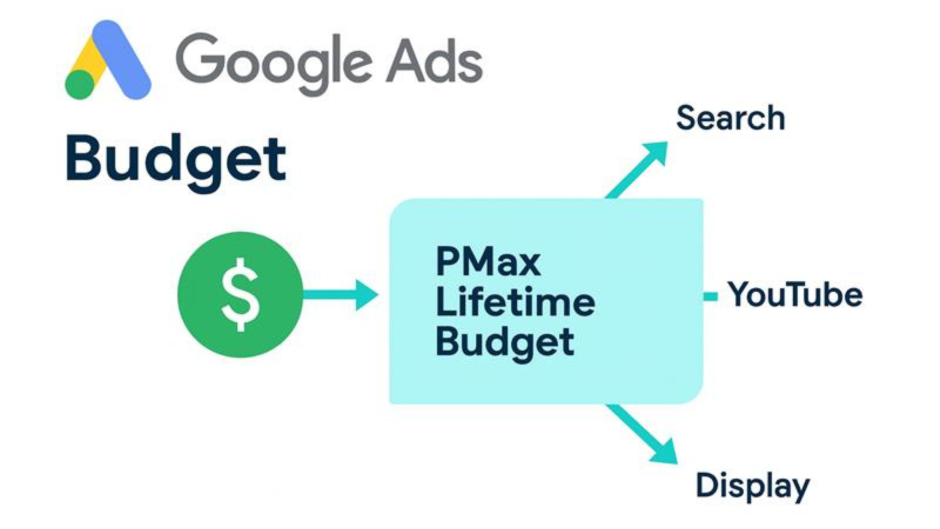

How Google Ads Lifetime Budget Update Changes PMax Campaigns
Google Ads now supports total (lifetime) budgets for Performance Max (PMax) campaigns outside the U.S., ending the era of only daily-budget pacing. This change gives marketers more control over spend, better budget predictability, and reduces the risk of overspend. But while it’s powerful, there are trade-offs, and it’s not yet a silver bullet.
Continue Reading

The Pros and Cons of AI and PPC Automation in Modern PPC Technology
This Blog demonstrates how AI and automation are used in today's PPC with the condition that only a human can provide the strategic direction for an AI or automated system to be effective. The article reviews both the advantages of using AI and automation (faster execution, more intelligent targeting, and better efficiency) as well as the disadvantages (the decision-making process is opaque, and the advertising creative is generic). The article also discusses how Sonnet’s Human-in-the-traffic methodology will keep the use of automation accountable for producing quality lead generation and revenue.
Continue Reading
How Does Consistency Create Real SEO Results in 2026?
Consistency is now still the best way to succeed with your SEO strategy in 2026. Consistent and frequent changes to content, as well as ongoing technical work to ensure that your website runs smoothly, and building links to your website ethically, will lead to your website earning trust with search engines over the long term. In this blog we will break down and explore how the small weekly improvements you make to your website can be much better at driving strong SEO performance, compared to making the occasional large improvement. We will also explore how by being consistent, your website becomes less vulnerable to the impact of algorithm changes, and therefore allows your agency to achieve longer-term growth for its client base.
Continue Reading

How to Tell If Your Generative Engine Optimisation (GEO) Is Actually Working
Generative Engine Optimisation (GEO) isn’t just the next phase of SEO. It’s how brands earn visibility in generative search, AI answers, and conversational platforms. But success isn’t measured by clicks or rankings—it’s about brand presence, trust, and conversion through real buyer intent. This post breaks down how to measure GEO performance using brand search, buyer-intent traffic, and prompt visibility, and how to build a simple scoreboard that shows whether your strategy is truly creating demand.
Continue Reading

Can Microsoft Clarity Help Create More Holistic Reports?
While GA4 captures the numbers, traffic, sessions, and conversions, it often misses the why behind user behaviour. Microsoft Clarity bridges that gap by offering behavioural insights such as heatmaps, session recordings, and interaction data. For agencies, combining Clarity with GA4 leads to more holistic reports that connect metrics with real user experience. Since Clarity is free and easy to integrate, it’s a practical way to add depth and context to client reporting, helping agencies explain performance clearly and identify new opportunities for optimisation.
Continue Reading

Social-First Search Strategies: A Practical Guide for Agencies
A guide for Agencies that explains how Instagram, TikTok and Pinterest now function as search engines and why agencies must optimise for in-app discovery. It highlights key signals (search queries, engagement, metadata, behaviour) and four reasons to prioritise social-search: shifting audience habits, untapped channels, stronger ROI and enhanced authority.
Continue Reading

Maximise Your Paid Media Budget through CRO: Strategies for Agencies
Discover why nearly 80% of paid media budgets fail to reach their full potential and how agencies can unlock hidden value by prioritising conversion rate optimisation (CRO) before scaling ad spend. This blog explains the pitfalls of ramping up ad budgets without improving on-site performance and introduces three core CRO strategies that turn existing traffic into a high-return, revenue-generating engine.
Continue Reading

How LinkedIn’s AI Post Suggestions Keep Agency Pages Fresh
This post explores how LinkedIn’s AI-powered post suggestions can support business pages, especially those run by digital marketing agencies, in maintaining consistent and relevant content output. From our own experience using the feature, we’ve seen how it helps reduce content planning time, aligns with industry-relevant topics, and ensures that brands stay active and visible on the platform. We also cover limitations and tips to get the most out of the tool, to help agencies evaluate its practical value for themselves or their clients.
Continue Reading

Solving Custom Audience Issues: Tips and Tricks
Ever launched a retargeting campaign only to discover your custom audience sitting at zero or far below the minimum threshold? From overly stringent URL conditions and seven-day look-back windows that exclude valuable visitors, to misfiring pixels, Conversion API hiccups and neglected domain verification, there are countless misconfigurations that can derail your audience-building efforts.
Continue Reading
LinkedIn Ads vs. Meta Ads: Which Platform Delivers for Agencies?
If you’re managing ad spend for clients, chances are you’ve been asked by clients something similar to : Should we go with LinkedIn or Meta? Truth is, there is no simple answer, it is nuanced, dependent on multiple variables and can change from campaign to campaign. Let’s take a look at which platform delivers and why.
Continue Reading


3 Reasons Why Agencies Should Invest in Both SEO and PPC
This article explores how combining SEO and paid search can drive greater results and ROI for businesses. We’ll delve into the mutual benefits of using both strategies to inform keyword targeting, reduce CPC, and enhance visibility.
Continue Reading

How to Win at Local SEO To Boost Search Ranking
Did you know that 78% of mobile local searches result in an offline purchase? That’s a powerful statistic that highlights the importance of local SEO for businesses. In today’s digital world, simply having a strong online presence isn’t enough. To attract customers nearby and ready to engage, mastering local SEO is essential.
Continue Reading

How to Decide Between Paid Search and Paid Social for Your Business
Deciding between paid search and paid social can be challenging, especially when the pressure is on to deliver measurable results. Both channels offer unique advantages, but the best choice depends on factors like your goals, target audience, and budget.
Continue Reading

ChatGPT Search: Transforming SEO for the Future
Did you know that over 60% of searches today result in zero-clicks because users are finding their answers directly on the search page. Search engines like ChatGPT Search are changing the way we approach SEO. This blog will explore the future of SEO with ChatGPT Search, highlighting its key features, benefits, and the impact it has on SEO strategies.
Continue Reading


Google AI: A New Era for Search
Did you know that Google's search algorithm processes over 63,000 searches per second? With such a vast amount of data being handled, Google has turned to AI to enhance search results and improve user experience. This blog will delve into the features of Google's new AI-organised search results, their impact on SEO, and strategies to navigate this evolving landscape.
Continue Reading

How to Maximise Google Analytics 4 (GA4)
You are about to sail across uncharted waters but instead of relying solely on the stars, you now have an advanced navigation system that offers real-time updates, identifying every hidden reef and guiding you towards smoother seas.
Continue Reading
The Synergy Between SEO and Paid Search: Combining Strategies for Maximum ROI
This article explores how combining SEO and paid search can drive greater results and ROI for businesses. We’ll delve into the mutual benefits of using both strategies to inform keyword targeting, reduce CPC, and enhance visibility.
Continue Reading