


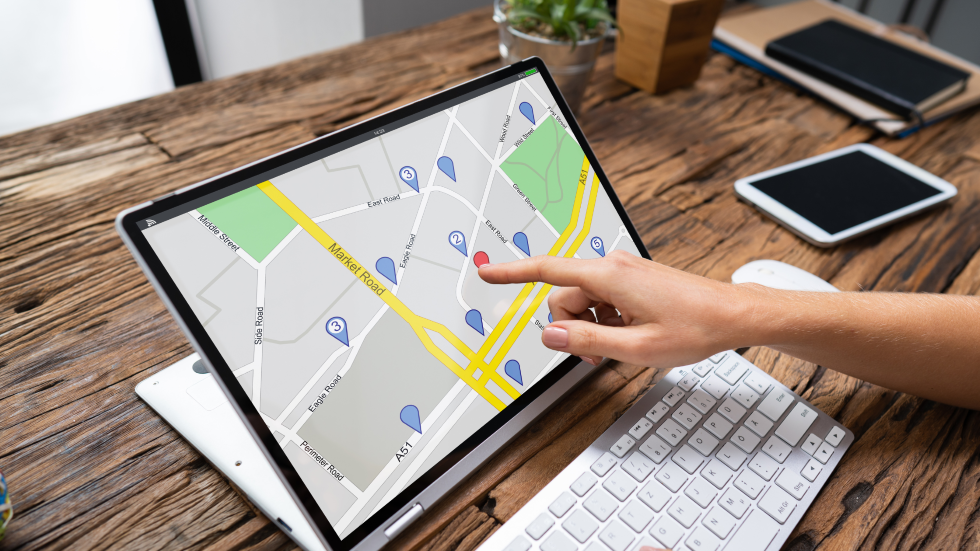

For years, digital advertising has largely focused on influencing awareness and consideration. But when it comes to real-world outcomes—store visits, bookings, calls—the most valuable moment is often the last one: when someone decides where to go.
Apple Maps is positioning itself squarely in that moment.
With advertising rolling out across the platform, businesses now have access to users actively searching, comparing, and choosing destinations. This isn’t passive scrolling or early-stage research. It’s intent in its most immediate form.
And that makes it one of the most commercially meaningful placements available.
Why This Matters Now
Apple Maps ads are launching initially in the U.S. and Canada, but the broader implication is clear: location-based advertising is becoming more tightly integrated with navigation behaviour.
This shift is happening alongside two major trends:
- The decline of third-party cookies, limiting traditional targeting methods
- Rising demand for privacy-first platforms, where user data is more restricted
Apple sits at the centre of both. Its ecosystem prioritises privacy, yet still provides highly contextual, real-time signals—like location and search intent.
That combination is rare.
It means advertisers can still reach highly relevant audiences, but without relying on invasive tracking.
Not Display Ads — Intent-Rich Search
It’s important to understand what Apple Maps ads are not.
They’re not display ads.
They’re not awareness campaigns.
Instead, they function much closer to local search advertising.
Think:
- A user searches “coffee near me”
- They see nearby options
- They choose where to go
Apple Maps ads allow businesses to appear at the top of that decision set.
This makes them comparable to promoted pins or paid placements in map-based search environments. The key difference is timing—these ads appear when the user is actively deciding, not casually browsing.
This is intent you can act on immediately.
Capturing the “Micro-Moment”
One of the most valuable concepts in modern digital strategy is the idea of micro-moments.
These are brief windows where users:
- Need something nearby
- Are ready to act
- Want the quickest, most relevant option
Apple Maps operates almost entirely within these moments.
Someone searching for:
- Lunch nearby
- A petrol station
- A pharmacy
- A retail store
…is often minutes away from making a decision.
That’s what makes this channel so different.
Unlike most digital ads—where conversion might happen hours or days later—Apple Maps ads can influence offline actions almost instantly.
- A tap becomes directions
- Directions become a visit
- A visit becomes revenue
Few channels offer that level of proximity to conversion.
Where Ads Appear (And Why It Matters)
Apple has confirmed that ads may appear in several key placements:
1. Search Results
When users actively look for a category or business, sponsored listings can appear above organic results.
This is the most straightforward use case—and likely the entry point for many advertisers.
2. Suggested Places
This is where things get more interesting.
Suggested Places surfaces recommendations based on:
- Location
- Behaviour
- Trends
- Context
In other words, users may see promoted businesses before they even search.
This blends search intent with discovery.
It’s similar to recommendation-driven environments, where relevance is inferred rather than explicitly requested.
This could become the most powerful placement on the platform.
Why? Because it allows businesses to influence decisions earlier—while still staying close to the moment of action.
3. Recommendations and Navigation Context
Ads may also appear during route planning or when exploring nearby options.
This introduces a new layer of influence:
- Not just where to go
- But what to choose along the way
For certain categories—food, fuel, retail—this is especially valuable.
The Digital Equivalent of Prime Location
There’s a useful analogy here.
Apple Maps ads are essentially premium storefront positioning, but in a digital environment.
In the physical world:
- Businesses pay more for high-traffic locations
- Visibility drives walk-ins
- Placement influences choice
Apple Maps replicates that dynamic:
- Higher visibility in search results
- Placement above competitors
- Immediate access to nearby demand
The difference is that instead of relying on geography alone, placement is dynamic and auction-based.
Who Benefits Most?
Not every business will see the same level of impact.
Apple Maps ads are particularly effective for businesses that rely on:
1. Foot Traffic
Retail stores, cafés, restaurants, and service providers benefit directly from increased visibility during nearby searches.
2. Local Discovery
Businesses that depend on “near me” intent—like salons, gyms, or medical services—are strong candidates.
3. Time-Sensitive Decisions
Categories where users need something now (food, fuel, essentials) align perfectly with micro-moment behaviour.
The Privacy Advantage
One of the more strategic aspects of Apple Maps advertising is its alignment with privacy trends.
Apple’s ecosystem limits user tracking but still allows for:
- Contextual targeting (location, time, behaviour)
- First-party data signals
- Real-time intent
This creates a different kind of efficiency.
Instead of building detailed user profiles, advertisers rely on situational relevance.
And in many cases, that’s more powerful.
A user searching for “lunch nearby” doesn’t need to be profiled—they’ve already told you exactly what they want.
What Agencies Should Be Thinking About
As this channel expands, there are a few practical considerations worth keeping in mind.
1. Location Data Accuracy Matters
Apple Maps pulls heavily from business listings. Ensuring accurate:
- Addresses
- Opening hours
- Categories
…is foundational.
If the underlying data is wrong, the ads won’t perform.
2. Creative Is Secondary to Relevance
Unlike display or social ads, creative plays a smaller role here.
The priority is:
- Being visible
- Being relevant
- Being nearby
This shifts the focus from design to placement strategy.
3. Budget Allocation Should Reflect Funnel Position
Apple Maps sits firmly at the lower end of the funnel.
That means:
- Higher conversion intent
- Potentially higher cost per click
- Stronger return on ad spend
It’s less about volume, more about efficiency.
4. Measurement Will Evolve
Tracking offline outcomes—like store visits—has always been challenging.
Apple Maps ads may rely more on:
- Direction taps
- Call clicks
- Engagement signals
Over time, attribution models will need to adapt to reflect real-world behaviour.
A Channel Built for Decision-Making
The most important takeaway is this:
Apple Maps ads don’t just generate interest—they influence decisions.
They sit at the final step of a very specific journey:
Search → Compare → Choose → Go
Most digital channels operate earlier in that process.
Apple Maps operates at the point where intent turns into action.
Final Thought
As digital advertising continues to evolve, the most valuable placements are those closest to real outcomes.
Apple Maps represents exactly that.
For businesses that rely on local demand, it offers something increasingly rare:
- High intent
- Immediate relevance
- Direct connection to offline behaviour
It’s not about reaching more people.
It’s about reaching the right person—at the exact moment they’re ready to move.
Related Articles




Why Choose Us?
With decades of experience and a dedicated team, we are committed to delivering high-quality web development services. Our client-centric approach ensures that we understand your needs and provide solutions that exceed your expectations.