


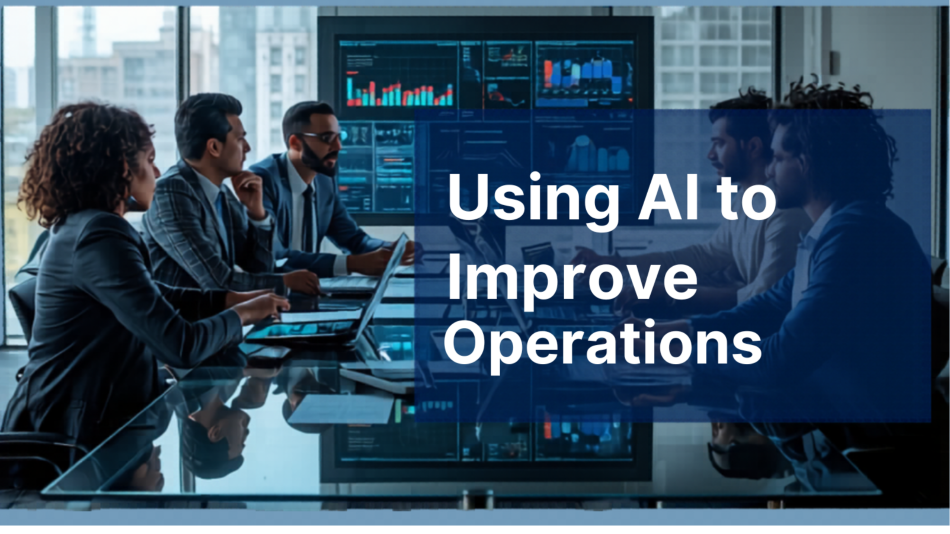

AI isn’t just for client work
AI has quickly moved from experimentation to everyday use in agencies. According to recent industry surveys, around 74% of agencies are already using AI to automate routine tasks—a clear signal that adoption is no longer optional.
Most of the focus, however, has been on improving service delivery: faster content creation, better campaign optimisation, and more efficient development workflows.
But there’s a gap.
Many agencies are overlooking one of the biggest opportunities AI presents: improving internal operations.
The way your agency runs behind the scenes—onboarding clients, managing projects, generating proposals, tracking finances—has just as much impact on profitability and client satisfaction as the work you deliver.
Why internal operations matter more than you think
When internal processes are inefficient, the symptoms show up everywhere:
- Projects start slowly or with missing information
- Teams spend hours on repetitive admin
- Billing errors create awkward client conversations
- Reporting becomes inconsistent or delayed
None of these issues are particularly complex. But they add up. Small inefficiencies, repeated daily, quietly erode margins and client trust.
Improving internal operations isn’t about replacing people. It’s about removing friction—so your team can focus on work that actually requires human judgement.
This is where AI, combined with automation tools, becomes powerful.
Where AI can make an immediate impact
Most agencies have dozens of internal processes that are at least partially manual. The key is identifying the ones that are both time-consuming and repeatable.
Some of the most common opportunities include:
1. Customer onboarding
Capturing client information, setting up folders, creating accounts, and generating documents can often involve multiple tools and manual steps.
AI and automation can:
- Extract and structure information from forms
- Trigger account creation across platforms
- Generate agreements or onboarding documents
2. Proposals and scoping
Proposal creation is often repetitive, even if each project is slightly different.
AI can:
- Draft proposals based on structured inputs
- Suggest pricing ranges based on past work
- Standardise language and reduce inconsistencies
3. Invoicing and financial workflows
Finance processes are critical—but often fragmented.
Automation can:
- Generate invoices based on tracked time or milestones
- Sync data between project tools and accounting platforms
- Flag anomalies or missing data
4. Reporting
Reporting is essential for clients, but time-consuming for teams.
AI can:
- Summarise performance data into readable insights
- Generate recurring reports automatically
- Highlight trends or issues worth attention
5. Internal performance and reviews
Performance reviews and team management often rely on scattered information.
AI can help:
- Aggregate performance data across tools
- Provide structured summaries for managers
- Identify patterns in workload or delivery
The mistake agencies make when starting with AI
One of the most common pitfalls is trying to automate something too complex, too quickly.
It’s tempting to aim for a fully automated, end-to-end workflow from day one. But this often leads to frustration—especially if the underlying process isn’t clearly defined.
Automation amplifies your process. If the process is unclear, automation makes it worse.
Before introducing AI, you need a solid foundation.
Step 1: Document your processes
If a process only exists in someone’s head, it’s not ready for automation.
Start by mapping out:
- What triggers the process
- The steps involved
- The tools used
- The expected outcome
This doesn’t need to be overly detailed. Even a simple checklist is enough to identify gaps and inefficiencies.
Step 2: Identify high-effort, repeatable tasks
Not every process is worth automating.
Focus on tasks that:
- Happen frequently
- Follow a predictable structure
- Require significant manual effort
These are where you’ll see the fastest return.
Step 3: Start small
Instead of automating an entire workflow, begin with a single step.
For example:
- Automatically creating a project folder when a deal is marked as “won”
- Generating a draft agreement from a standard template
- Syncing client details between systems
These small wins build confidence and momentum.
Step 4: Choose the right tools
There’s no shortage of tools available, but a few stand out for agency workflows:
- Make.com – Ideal for connecting different apps and building visual workflows
- n8n – A more flexible option for those comfortable with technical setups
These tools allow you to link systems together and introduce AI where it adds value—whether that’s generating content, transforming data, or triggering actions.
Step 5: Use AI as the glue
AI works best when it sits between systems, helping interpret and transform information.
For example:
- Turning form responses into structured data
- Generating human-readable summaries from raw metrics
- Translating inputs into formatted documents
Rather than thinking of AI as a standalone solution, it’s more useful to treat it as a layer that enhances your existing tools.
A practical example: Automating onboarding
A well-designed onboarding process sets the tone for the entire client relationship—but it’s often one of the most fragmented workflows inside an agency.
A more streamlined approach might look like this:
- A client completes an onboarding form
- The system automatically:
- Creates a project in a task management tool
- Generates a structured folder for files
- Produces a draft agreement
- Sets up time tracking and billing profiles
- Key information is synced across systems
- The team is notified with everything ready to go
This kind of workflow doesn’t just save time. It reduces errors, ensures consistency, and improves the client experience from day one.
The broader impact on your agency
When internal operations run smoothly, the benefits extend beyond efficiency:
Better client experience
Faster onboarding, clearer communication, and fewer mistakes all contribute to stronger relationships.
Improved team productivity
Your team spends less time on admin and more time on meaningful work.
Greater scalability
Well-structured processes make it easier to grow without constantly adding overhead.
Reduced risk
Automation reduces reliance on manual steps, lowering the chance of errors or missed tasks.
A practical way to get started
If you’re looking to introduce AI into your operations, keep it simple:
- Pick one process
- Document it clearly
- Identify one manual step to automate
- Implement and test
- Refine before expanding
You don’t need a complete transformation to see results—just consistent, incremental improvements.
Final takeaway
AI isn’t just a tool for delivering client work faster. It’s a way to build a more efficient, reliable, and scalable agency.
The agencies seeing the most value aren’t the ones chasing the most advanced use cases. They’re the ones applying AI thoughtfully—starting with their internal operations.
Because in the end, how your agency runs matters just as much as what it delivers.
Related Articles

Why Choose Us?
With decades of experience and a dedicated team, we are committed to delivering high-quality web development services. Our client-centric approach ensures that we understand your needs and provide solutions that exceed your expectations.